A dashboard is not a driver app.
Drivers kept zooming, scrolling, and re-entering data because the tool was never built for a truck cab. Gloves, glare, and tight timing were not part of the original brief.
Drivers start at 6 a.m., wear gloves, and run a dozen stops a day. The old dispatch tool fought them at every step. We built a mobile app that holds up next to the apps they already use on their own phones.
Drivers were juggling pickups, signatures, and manifests inside software written for back-office use. The interface ignored the job. Missed inventory turned into compliance risk. Every stop took longer than it should have.
Drivers kept zooming, scrolling, and re-entering data because the tool was never built for a truck cab. Gloves, glare, and tight timing were not part of the original brief.
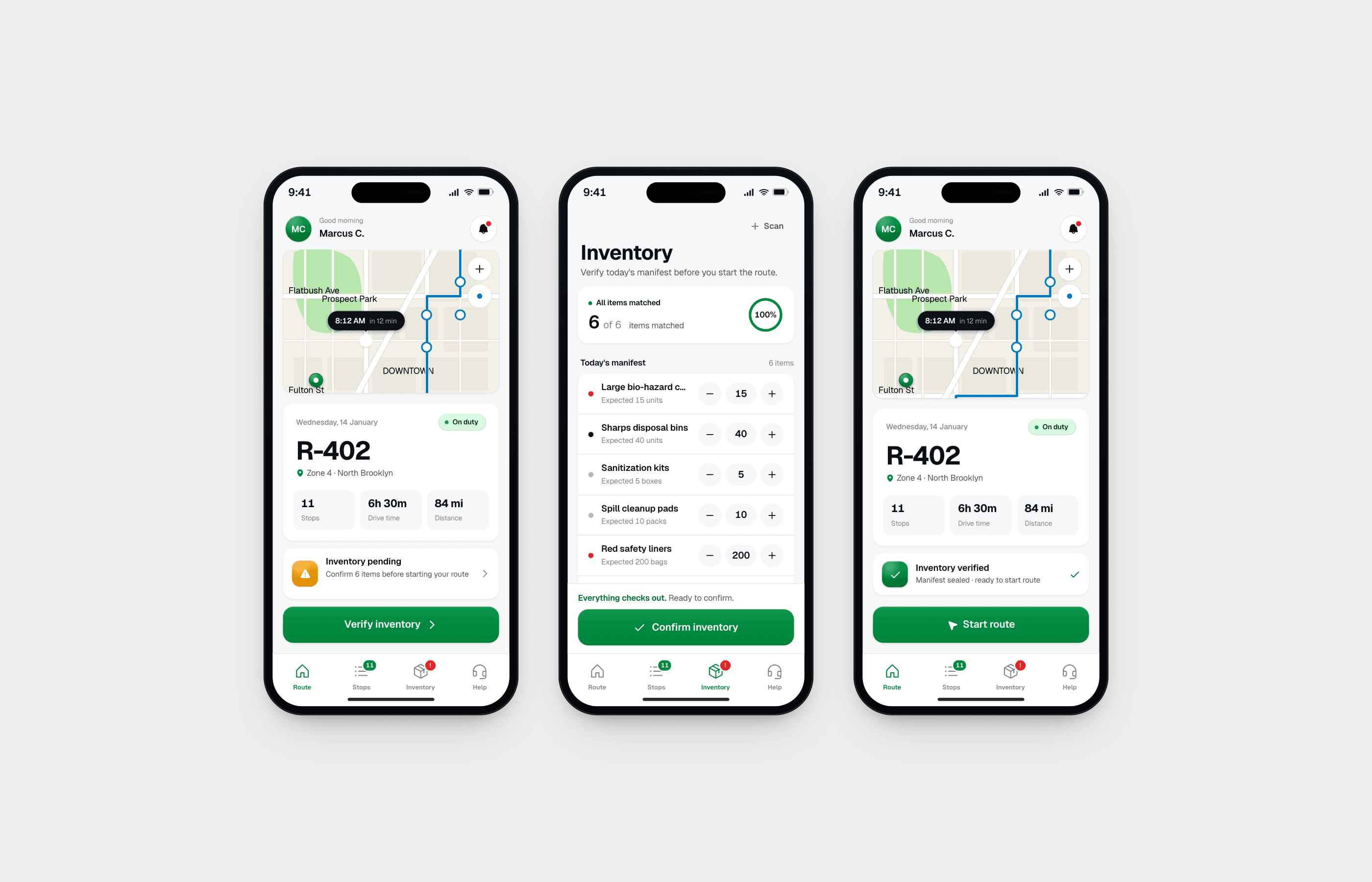
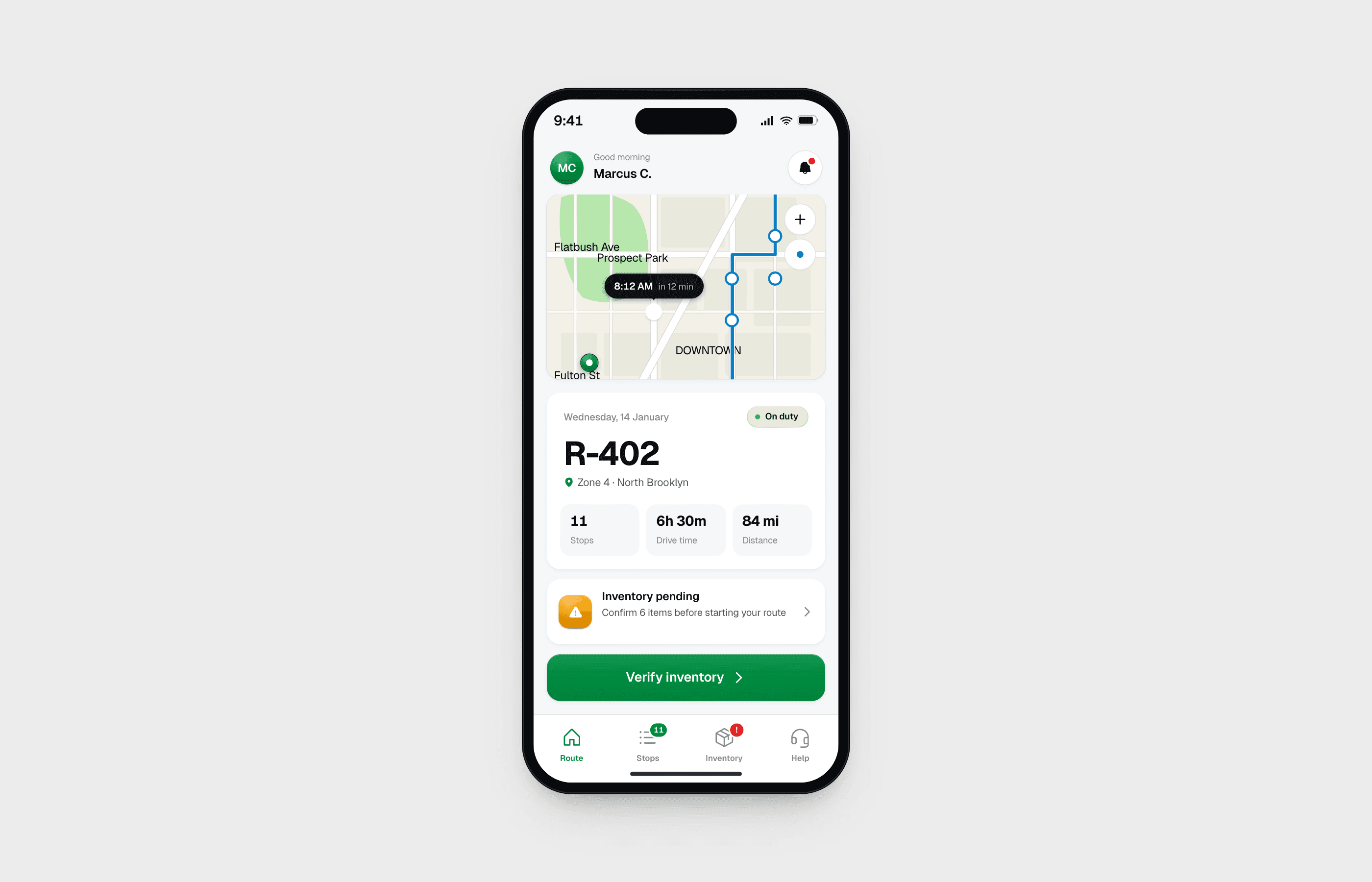
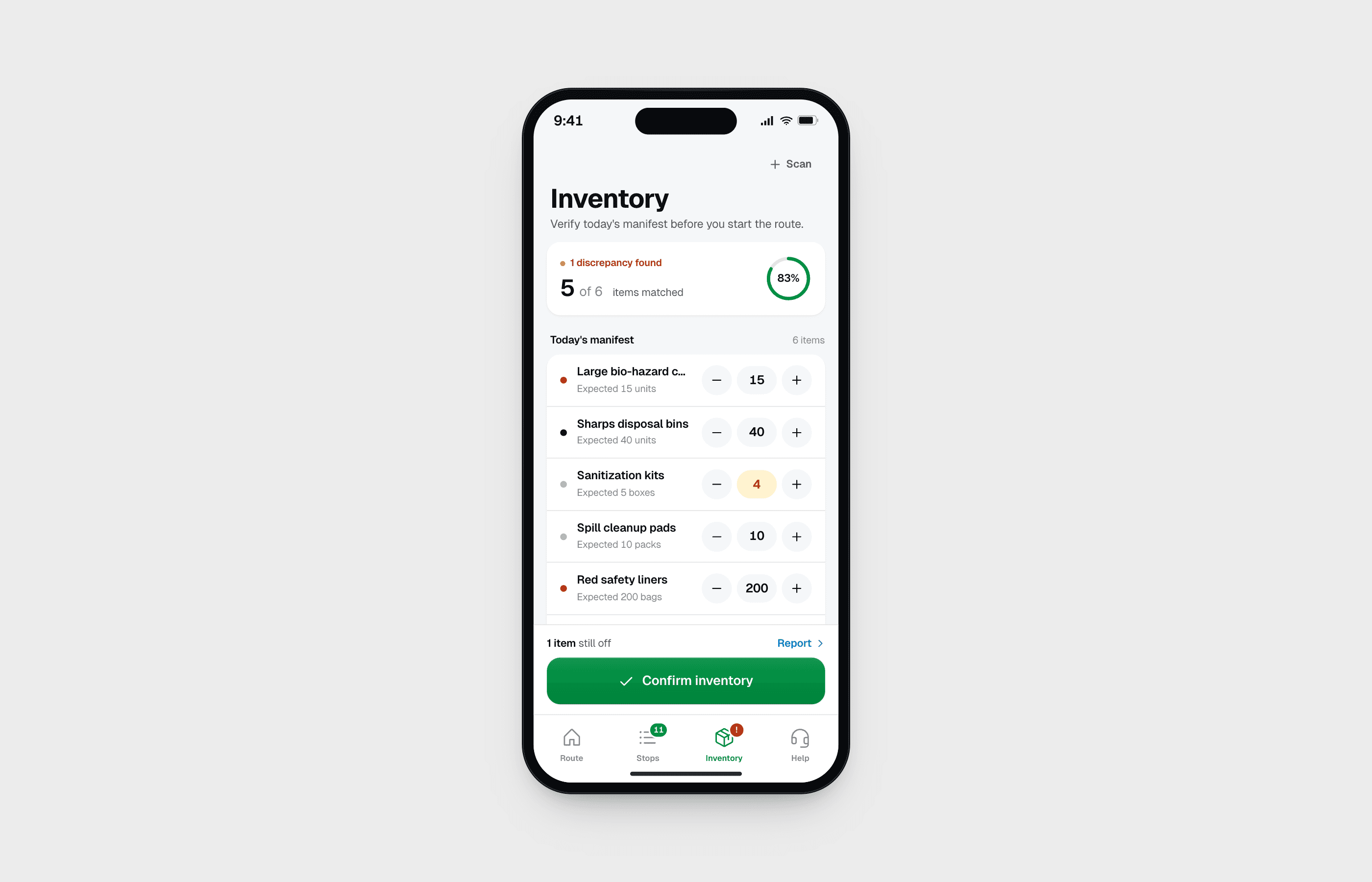
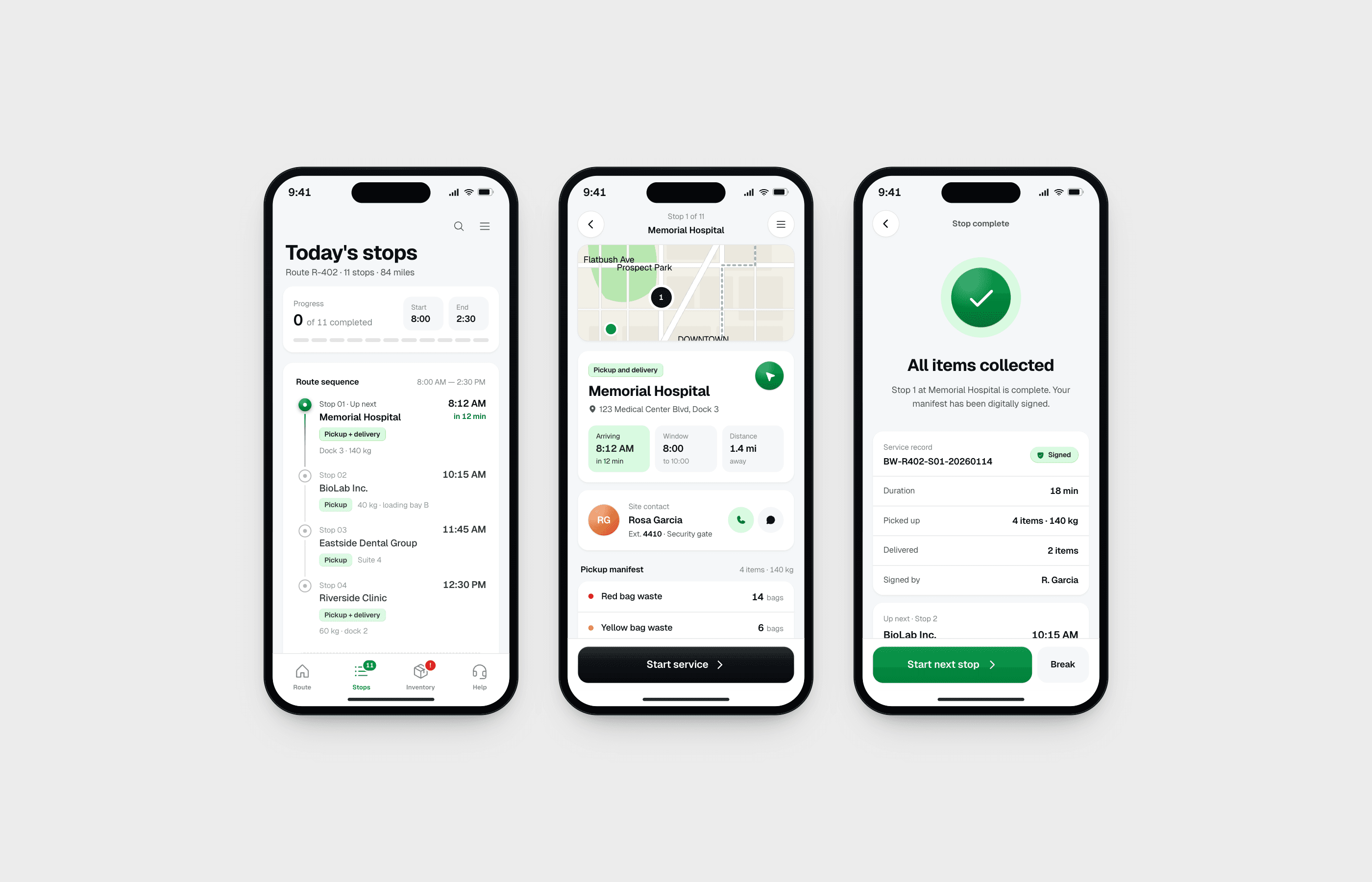
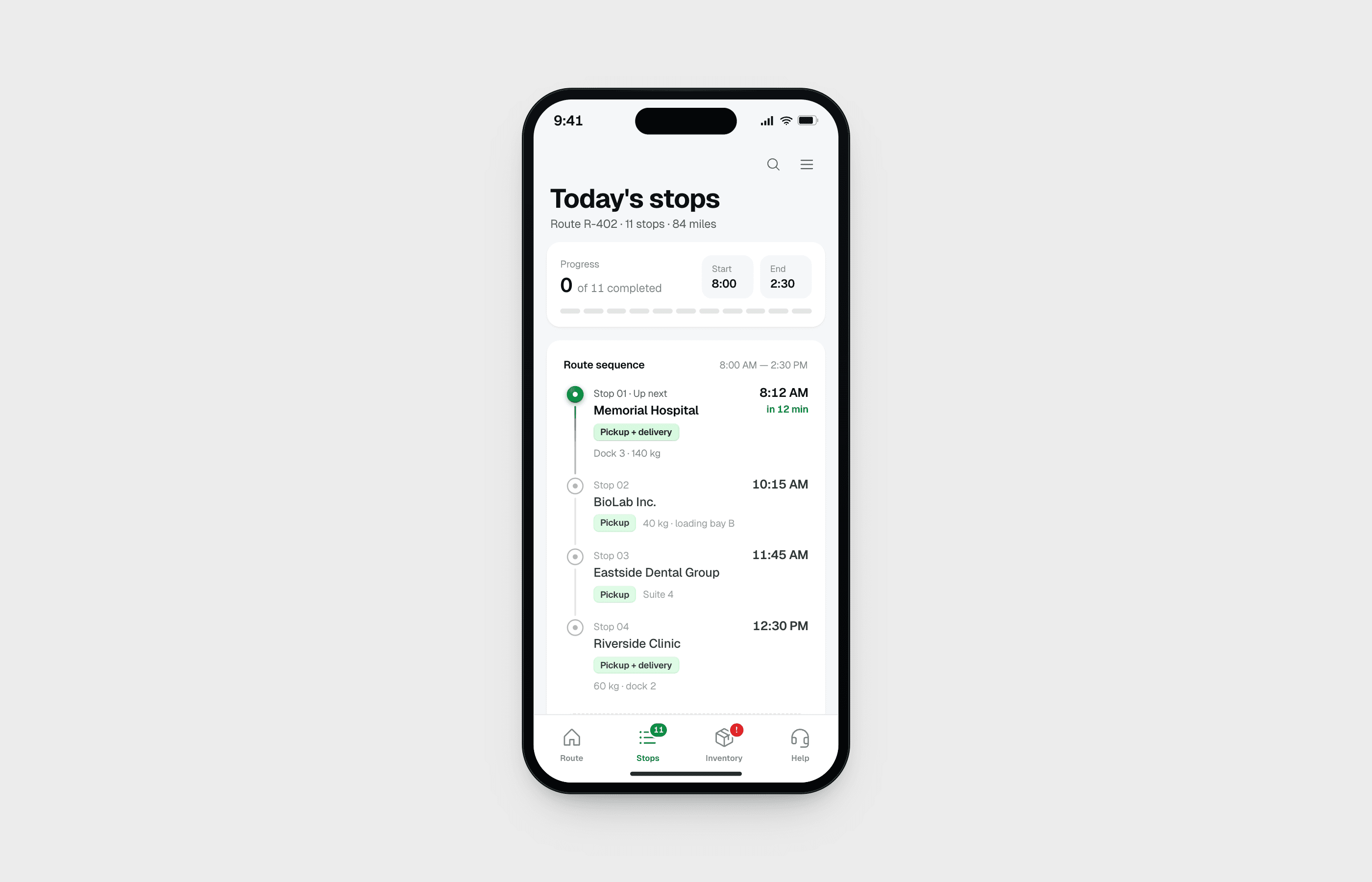
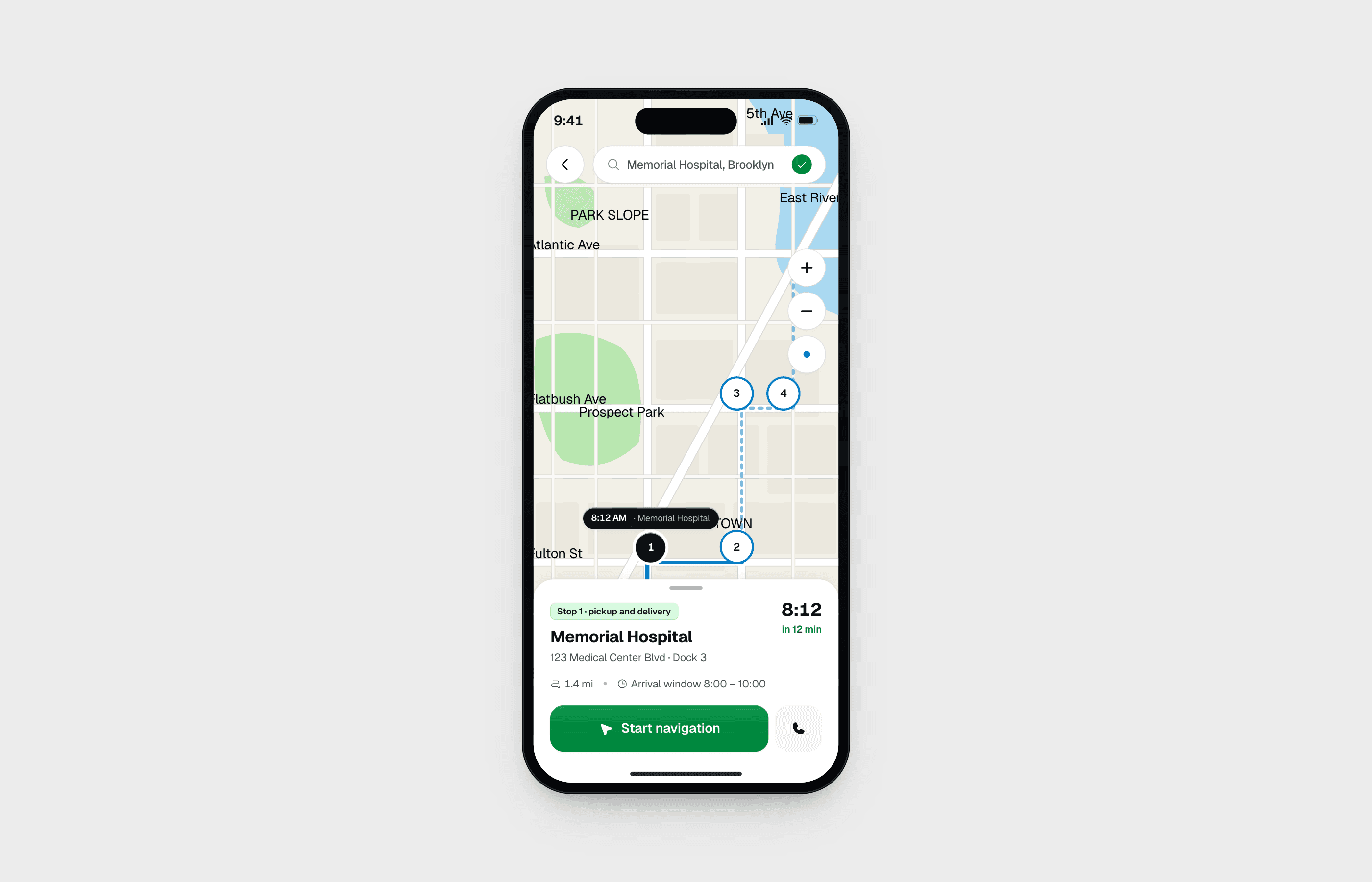
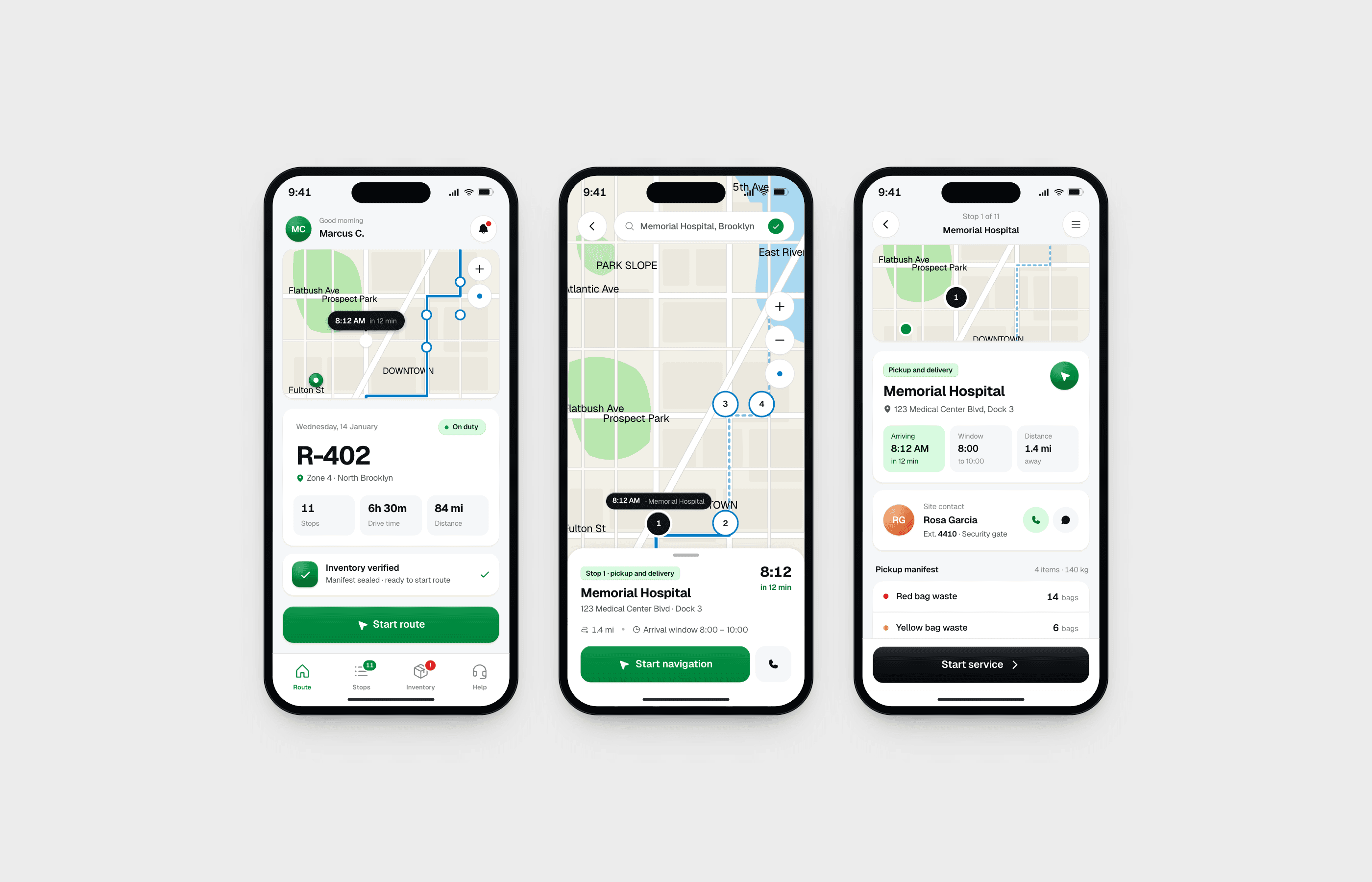
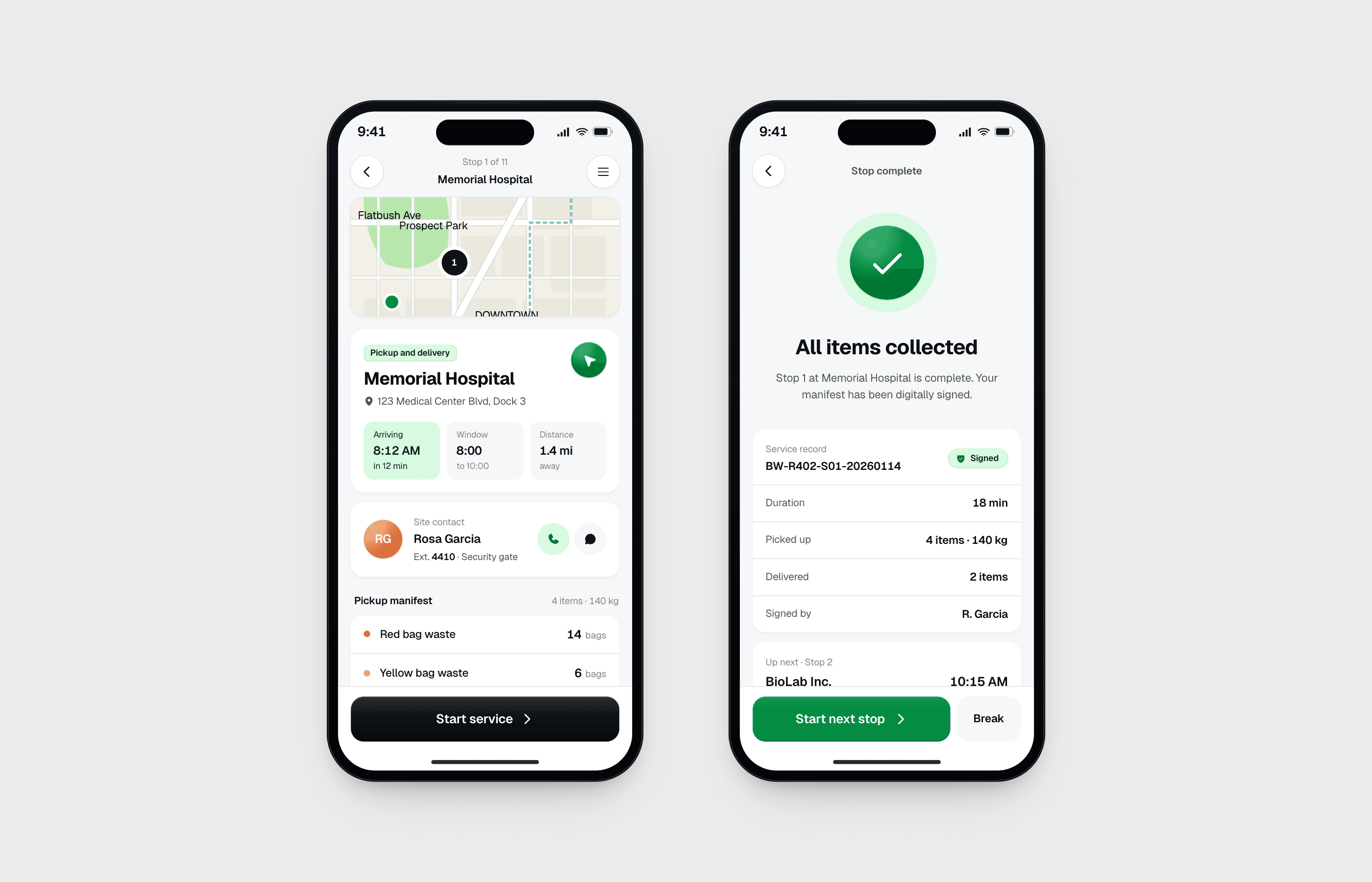
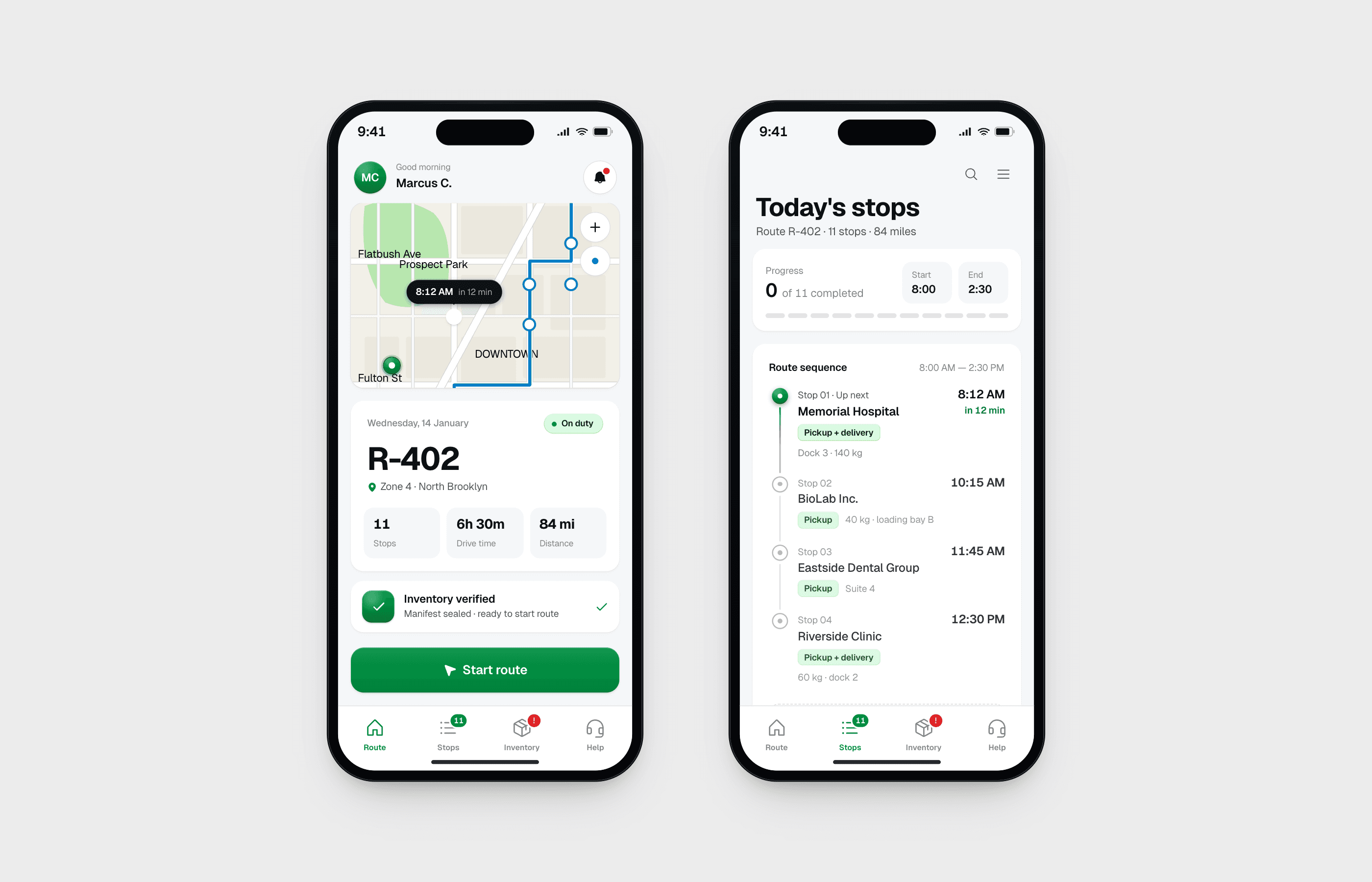
We set the bar at consumer apps. Apple Maps-grade routing, pill buttons sized for gloved hands, bottom sheets that carry one decision at a time. If a screen is not legible at a glance, it does not ship.
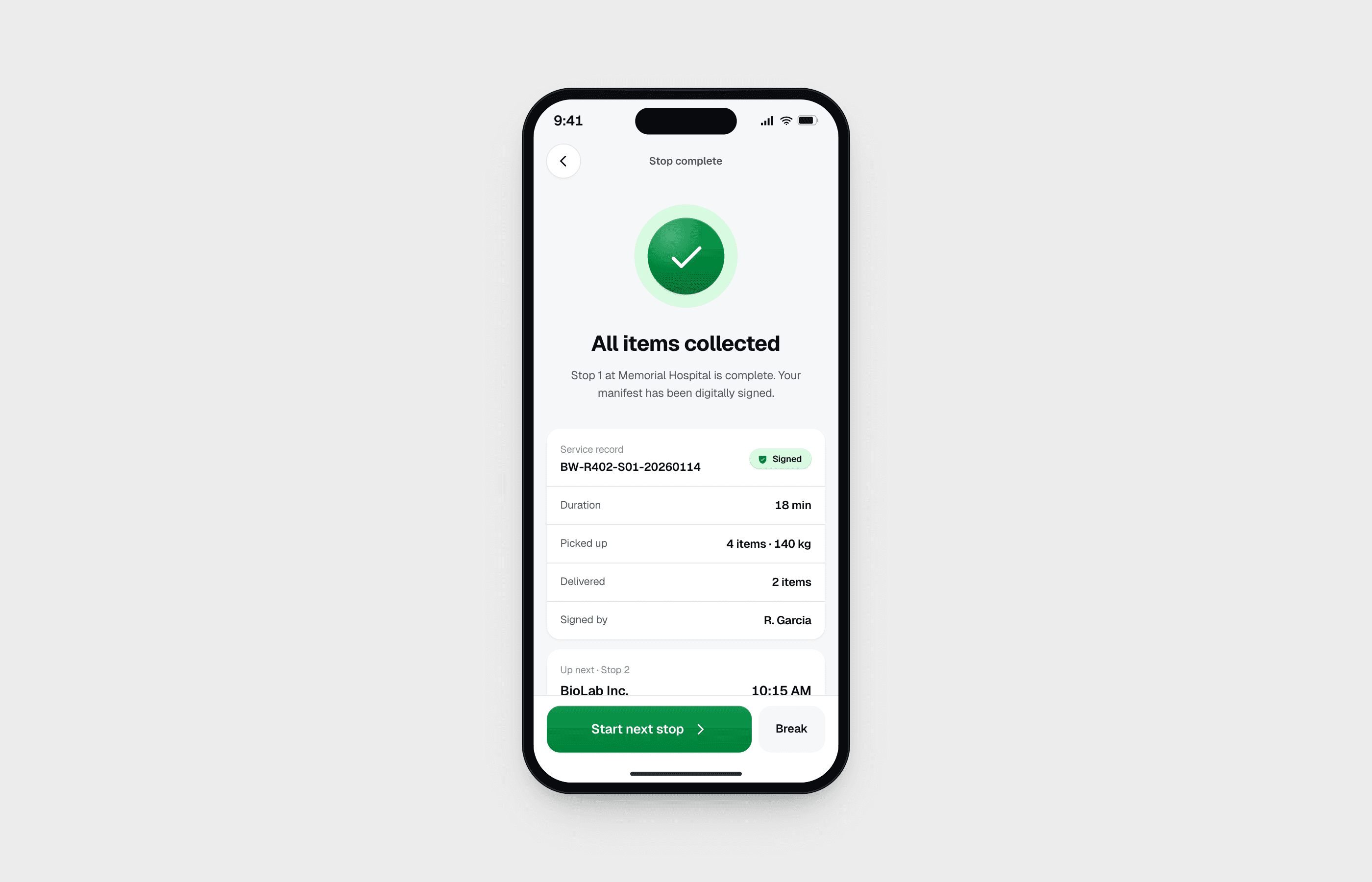
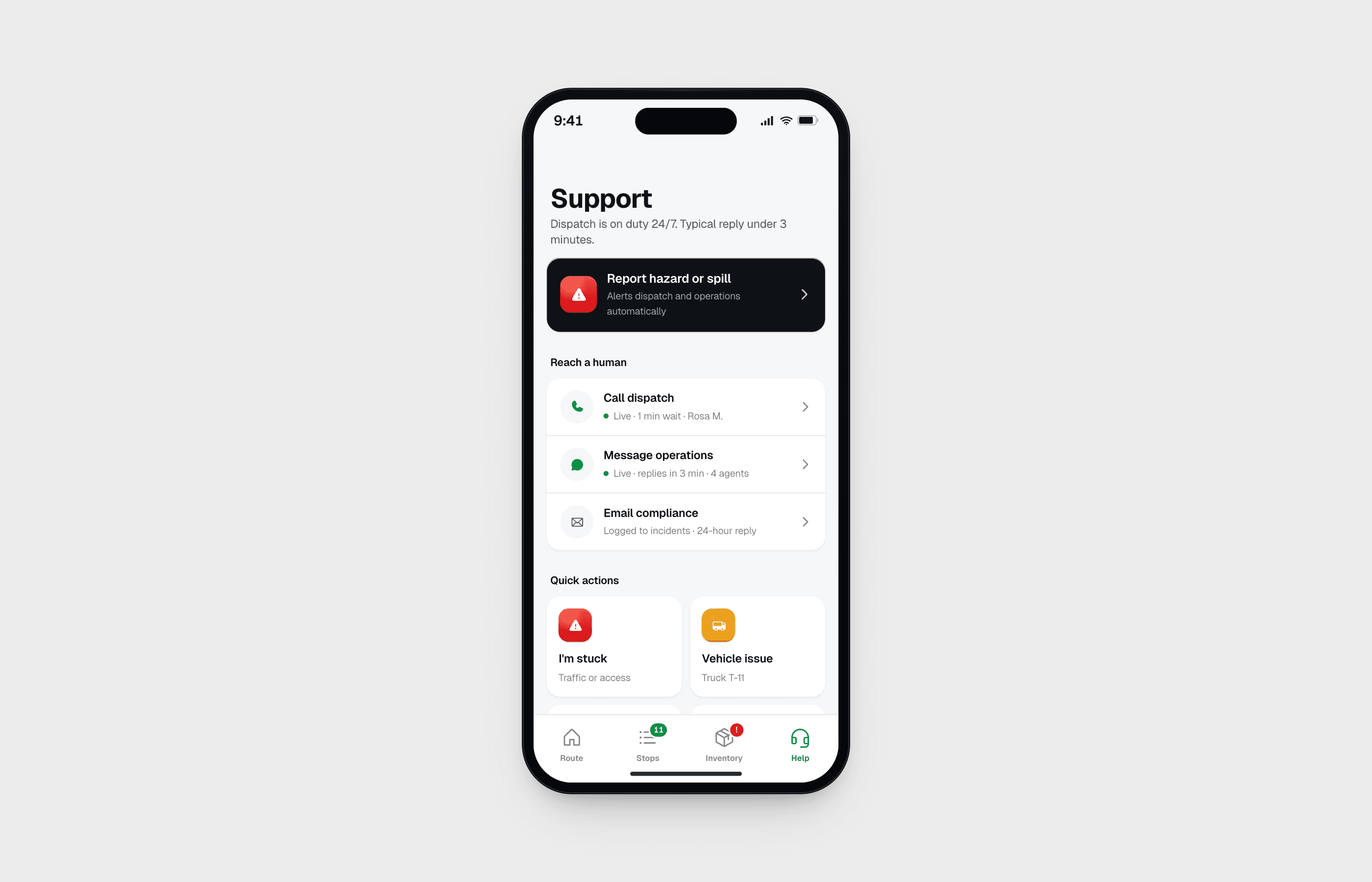
From the 6 a.m. greeting to the final signed receipt, every surface is built for a specific moment of the day. Timeline, stop detail, inventory, navigation, support. Each screen answers exactly what the driver needs next.
Drivers no longer switch context between work tools and real apps. The polish is the same. Shifts run smoother, manifests land correctly the first time, and compliance gaps close the moment a stop is signed.
“It finally feels like the tool is working with us, not against us.”