The business matched the user experience.
High return rates and abandoned carts were eating into margins. Any redesign had to shift both behaviours without making the product feel restrictive.
Traditional fashion e-commerce optimizes for browsing. Zilo bet the real problem was decision friction — so we rebuilt the product around choosing, not scrolling.
Zilo's thesis ran counter to the industry: users don't struggle to find clothes, they struggle to choose. Endless catalogs create overload, kill confidence, and spike returns.
High return rates and abandoned carts were eating into margins. Any redesign had to shift both behaviours without making the product feel restrictive.
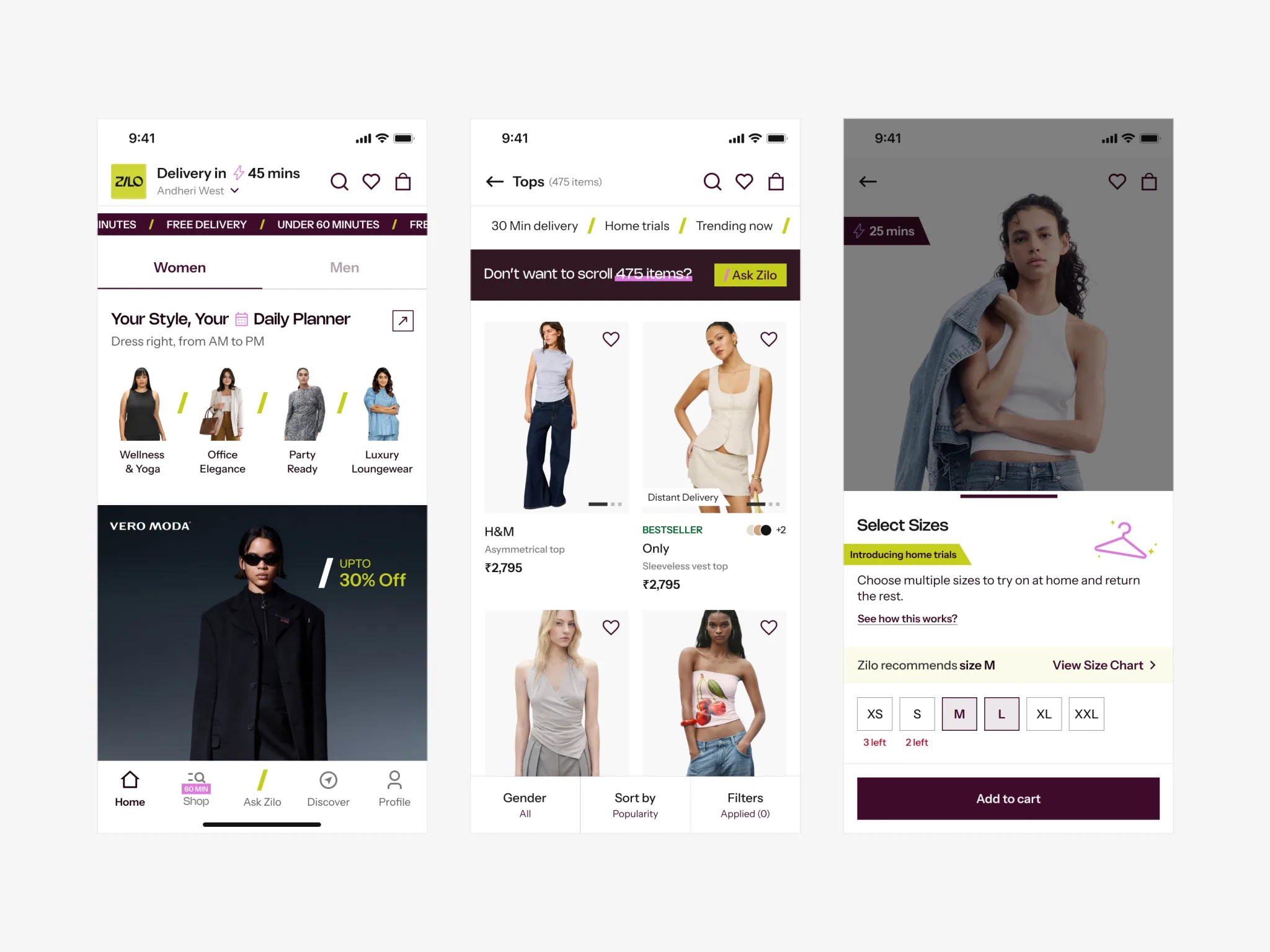
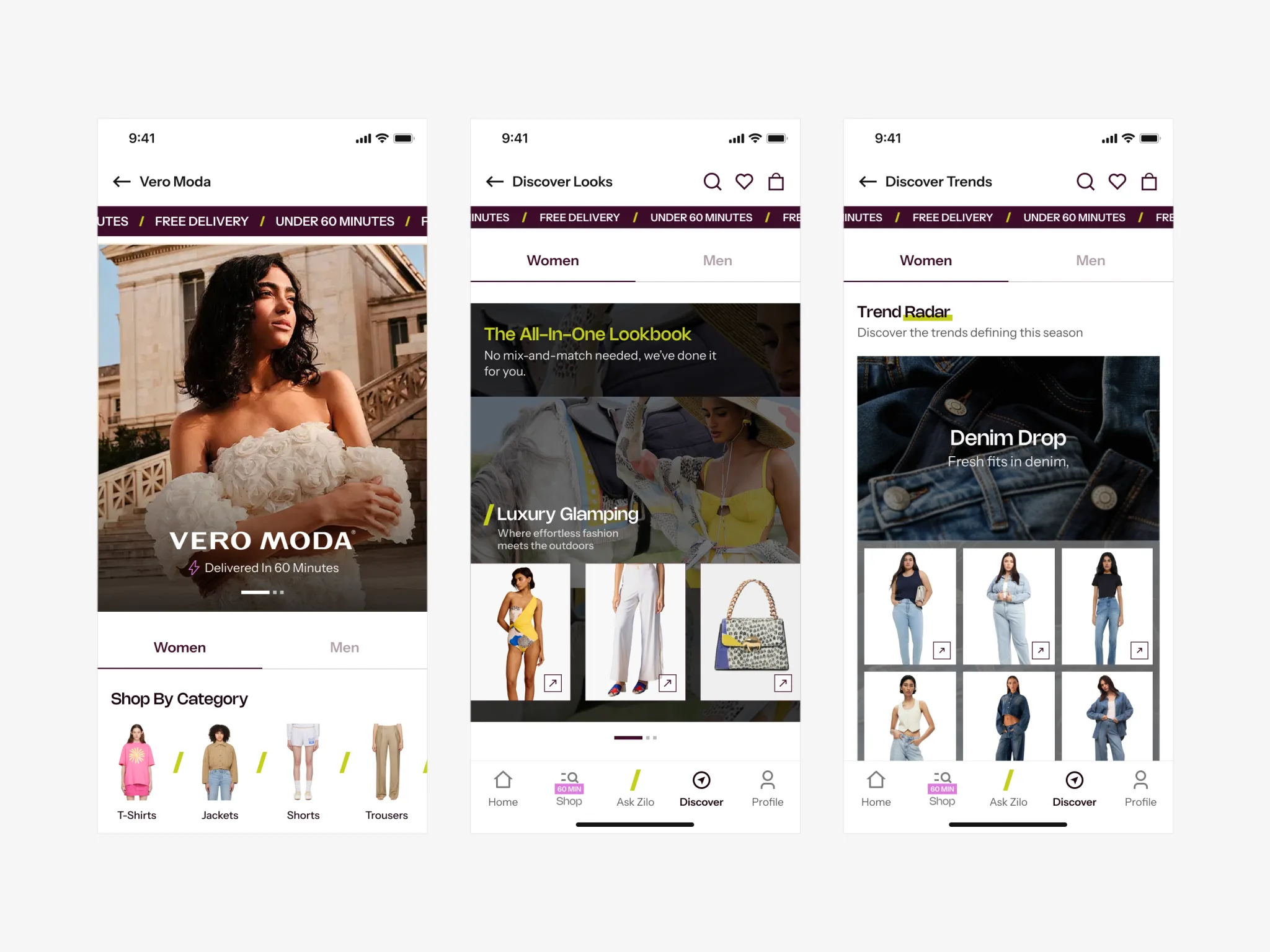
Instead of endless listings, users see a small, styled set of outfits recommended for them. Every screen is tuned to help someone decide — not compare.
Products appear in styled contexts so people can picture wearing them. The path from intent to checkout got shorter, with guided discovery replacing aimless scrolling.
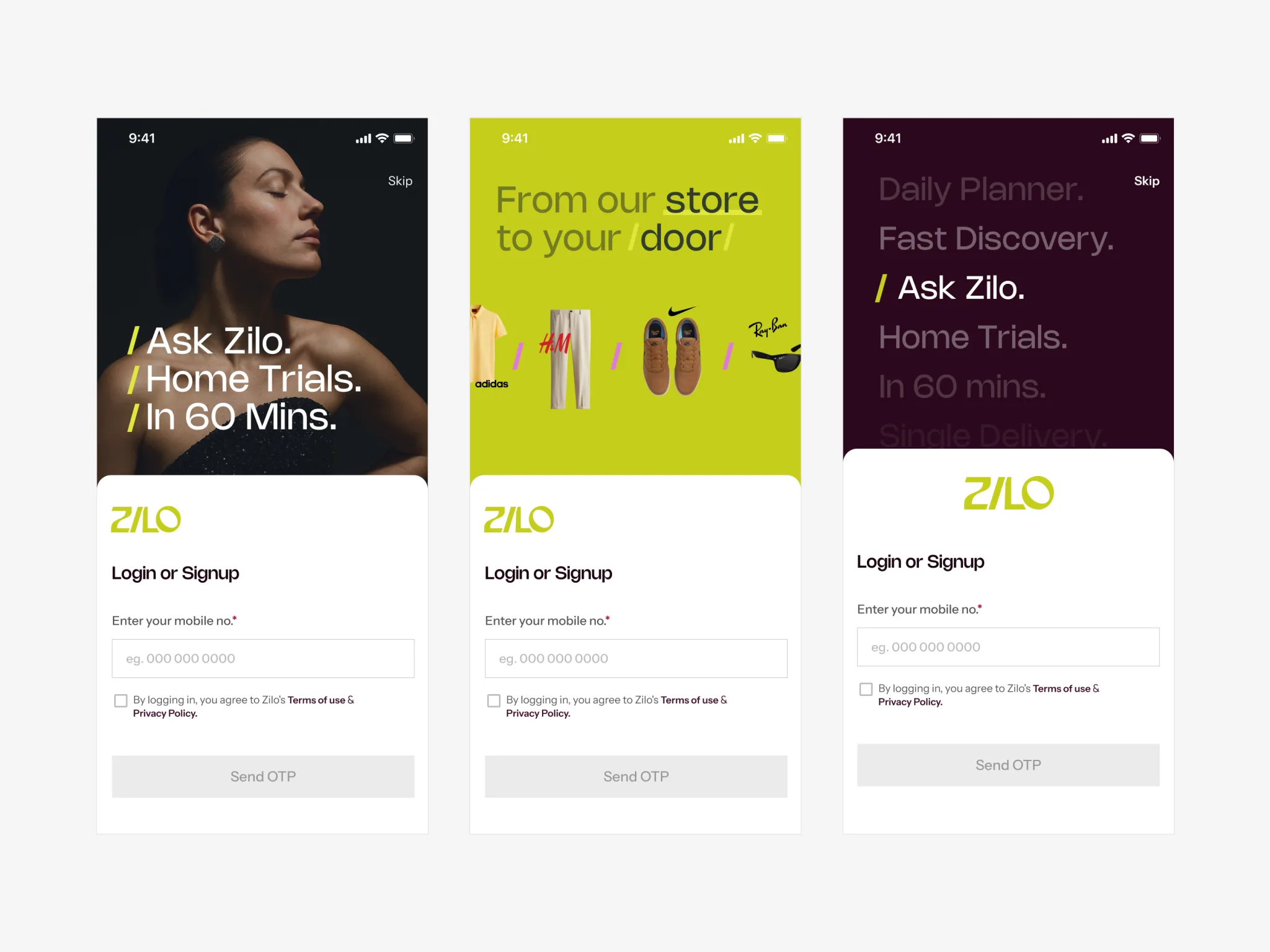
Brand identity was built alongside the product. Typography, colour, and tone all lean into the decision-first thesis, making the whole experience feel composed rather than overwhelming.
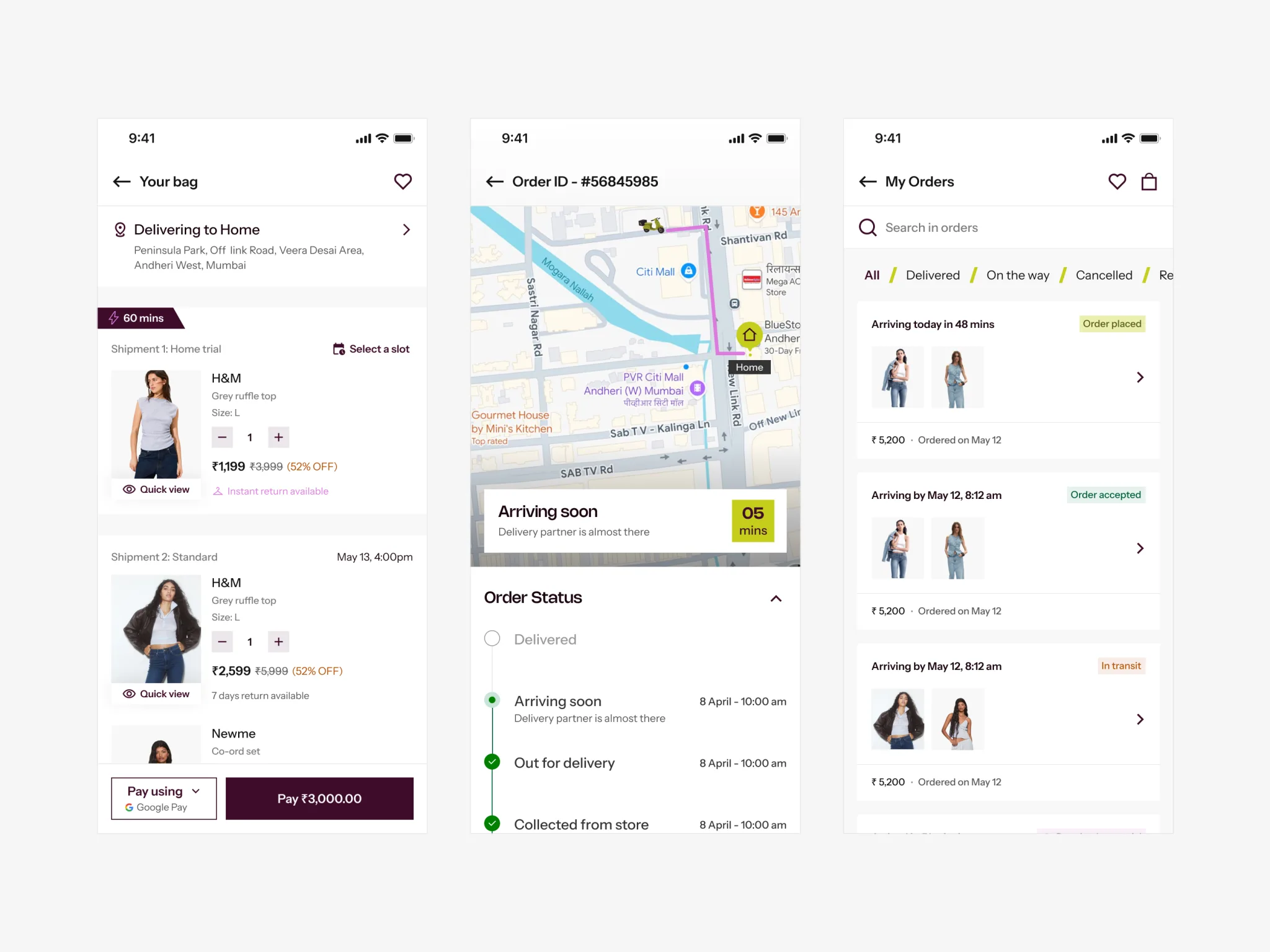
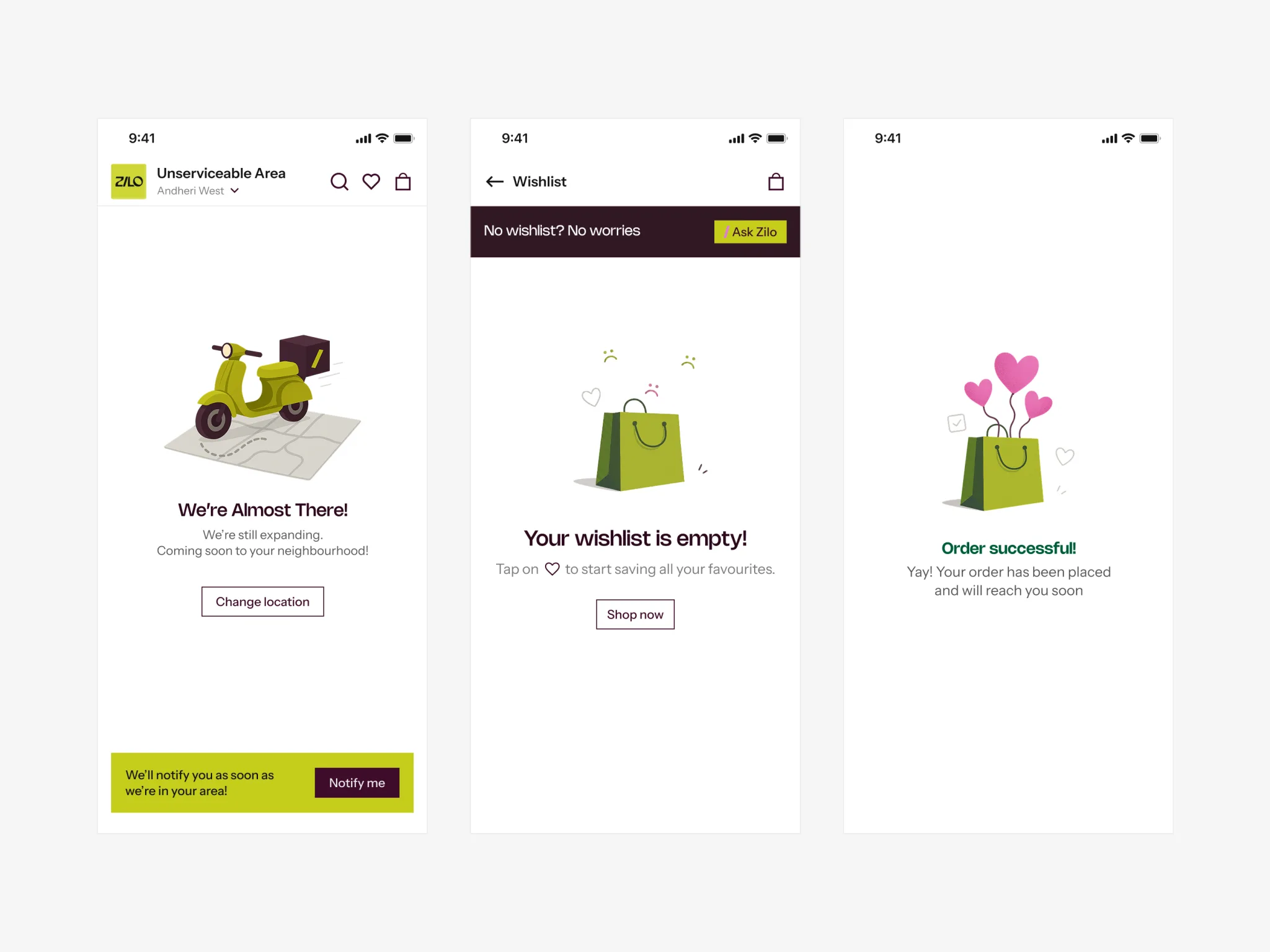
Onboarding, discovery, product detail, and checkout all share the same compositional rhythm — so moving through the app never feels like crossing between apps.
Users now reach checkout three times faster with 40% fewer steps. Purchases feel more intentional. Returns dropped as a result.
“Every screen now has one job: help someone decide.”